
Sweat stains on white shirts are every wardrobe’s worst enemy. Whether you’re in the boardroom, on a date, or headed to an event, those unsightly yellow marks under your arms or around the collar can ruin an otherwise crisp, clean look. The good news is that these stains don’t have to be permanent—understanding why they form and adopting the right prevention strategies can keep your shirts looking fresh, even after repeated wear and washing. Sweat doesn’t just disappear in the wash; it seeps deep into the fabric fibers and mixes with deodorant ingredients, leaving a lasting mark if left unchecked.
The key to keeping your shirts looking new is preventing stains before they appear. Understanding why collar stains form in the first place can help you implement the most effective prevention strategies. Learn more in our detailed guide on Collar Stains: Causes & Science.
Preventing sweat stains isn’t just about washing your shirts more often—it’s about adopting smart daily habits, caring for collars, and taking proactive steps that protect your shirts over time. From wardrobe routines to long-term shirt care, there are simple strategies that can make a big difference in keeping your white shirts crisp and fresh. Below, we’ve outlined the key areas to focus on, giving you a complete roadmap for avoiding stains before they ever appear.
Comprehensive Strategies to Protect Your Shirts
Keeping your white shirts looking sharp goes beyond occasional washing. Long-term care, daily habits, and proper wardrobe routines all play a role in preventing sweat marks and collar stains before they appear.
Here’s a quick overview of the areas we cover in more detail across our related content:
-
Men’s Wardrobe Stain Prevention: Small wardrobe routines and daily habits that help keep your shirts fresh and stain-free over time.
-
Shirt Collar Stains: How to Prevent and Eliminate Them: Practical tips for keeping collars clean, crisp, and protected from sweat.
-
How to Extend the Lifespan of Your Shirts: Collar Care Tips: Long-term strategies to preserve the appearance and fabric of your favorite dress shirts.
-
Dress Shirt Care Tips to Keep Your Shirts Looking Sharp: Daily maintenance techniques that maintain a polished, professional look from collar to cuff.
-
Everyday Habits That Cause Collar Stains: Common routines and behaviors that can silently contribute to unwanted rings and discoloration.
By understanding these topics, you’ll be better equipped to stop sweat stains before they form and keep every shirt in your wardrobe looking its best.
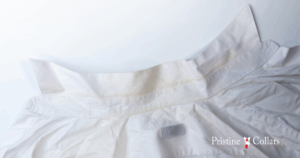 Why Sweat Stains Form on White Shirts
Sweat itself is mostly water, but it also contains salts, proteins, and oils. When sweat mixes with deodorant or antiperspirant ingredients, it can bond to fabric fibers. Over time, this reaction leads to yellow stains that are difficult to remove.
White shirts are especially vulnerable because discoloration is more visible, and repeated washing can actually lock stains deeper into the fibers instead of removing them.
Common Problem Areas: Collars and Underarms
Collars and underarms experience the most heat, friction, and moisture. These areas absorb sweat repeatedly, making them the first places stains appear and the hardest to restore once discoloration sets in.
How to prevent yellow underarm stains on white shirts
Underarm stains are usually caused by antiperspirant, not by sweat alone. The aluminum compounds that reduce wetness combine with the proteins in sweat. Over repeated wears and washes, that combination builds up in the fabric and turns yellow. A few changes to your routine make a real difference.
Let antiperspirant dry before you dress
Wet antiperspirant transfers straight onto fabric. Give it a few minutes to dry fully before you put on a white shirt, and use a thin layer rather than a heavy one. Applying it at night, when you sweat less, lets it work with less product on your skin in the morning.
Consider aluminum-free deodorant
Without aluminum, there’s much less of the residue that causes yellowing. The trade-off is that aluminum-free deodorant controls odor but not wetness. Some people use it on days they’re wearing their best white shirts.
Wear a fitted undershirt
A close-fitting undershirt absorbs sweat and antiperspirant before they reach your dress shirt. It’s far cheaper to replace an undershirt than a good white shirt.
Wash soon, and keep the heat down
Sweat left to sit in a hamper for days has more time to settle into the fibers. Wash white shirts soon after wearing them, in cool or warm water rather than hot. Check the underarms before drying, because dryer heat can set protein stains for good.
Skip the chlorine bleach
It seems like the obvious fix for white shirts, but chlorine bleach reacts with the proteins in sweat and can make underarm yellowing darker. Stick to a regular detergent on these areas.
Daily Habits That Contribute to Collar and Sweat Stains
Most sweat stains don’t happen overnight. They develop gradually due to repeated habits.
Wardrobe Routines That Matter
Wearing the same shirts too frequently, skipping undershirts, or storing shirts improperly allows sweat residue to build up in the fabric. Rotating shirts and letting them fully dry between wears helps reduce moisture retention and odor buildup.
Lifestyle Choices That Accelerate Staining
Tight collars, heavy deodorant application, and wearing dress shirts during high-heat activities increase sweat absorption. Without preventative care, these habits make stains more likely to form and harder to remove.
Long-Term Shirt Care for Preventing Sweat Stains
Preventing sweat stains long term requires more than spot cleaning.
Collar Maintenance Techniques
Gentle washing, mindful fabric care, and proactive protection help keep sweat from penetrating deep into the fibers. When collars are protected at the fiber level, stains are far less likely to leave permanent marks.
Extending the Lifespan of Your Shirts
Consistent laundering routines, avoiding excessive heat, and allowing shirts to rest between wears preserves fabric strength and appearance. Long-term care prevents the gradual buildup that leads to discoloration.
Dress Shirt Care Tips to Keep Your Shirts Looking Sharp
Laundry Practices That Help Prevent Stains
Harsh detergents, high heat, and over-washing can weaken fabric fibers, making them more susceptible to sweat stains. Washing shirts inside out and treating collars proactively helps keep fibers strong and clean.
Proper Storage and Handling
Hanging shirts correctly, avoiding overcrowding, and minimizing friction around collars and cuffs helps maintain a crisp, stain-free appearance over time.
How Protective Treatments Help Prevent Sweat Stains
Using PristineCollars to Stop Stains Before They Start
PristineCollars is designed to prevent sweat stains before they form. It creates a nanotech fabric coating that is water soluble, that helps keep sweat and oils from setting into the fibers.
Your shirt will still get sweaty and need washing, but sweat and oils are far less likely to set into the fibers. That means fewer leftover rings and yellow marks after washing, especially around collars.
When and How to Apply Protection
For best results, apply PristineCollars as part of your regular laundry routine or before wearing your shirt. Consistent use helps maintain protection and keeps shirts looking clean longer.
Frequently Asked Questions About Sweat Stains
How can I stop ring around the collar before it starts?
Preventing ring around the collar starts with daily habits, proper fabric care, and proactive protection. When sweat and oils are kept from setting into the fibers, stains are much less likely to form.
Do daily habits really affect sweat stains on white shirts?
Yes. Shirt rotation, undershirts, laundering practices, and collar care all play a role. Small habits repeated over time are often the biggest contributors to sweat stains.
Why do sweat stains form on white shirts even when I wash them regularly?
The yellowing or discoloration is caused by sweat, oils, and grooming products penetrating the fibers. Washing can remove surface residue, but it cannot prevent the substances from building up. For more details on why this happens, see [why collar stains form]
Why do sweat stains turn white shirts yellow?
The stains come from a chemical reaction between aluminum in antiperspirants and proteins in sweat. Over time, the buildup becomes permanent unless prevented early. Applying PristineCollars before wear helps keep sweat and oils from setting into the fabric.
Does washing remove sweat stains?
Not always. Regular washing may fade them, but without protection, the stains soak deep into the fibers. PristineCollars helps keep sweat from soaking into the fibers, so each wash has an easier job.
How can I keep my dress shirts white longer?
Wash white shirts soon after wearing them, and apply PristineCollars to the clean, dry collar after every wash or dry cleaning. This simple routine helps keep sweat from building up in the fabric over time.
Can PristineCollars be used on other shirt colors?
It works on colored shirts as well as white ones. It dries invisible and is designed not to change the fabric’s feel or color, but test delicate fabrics on a hidden spot first.
Does aluminum-free deodorant stop yellow stains?
It greatly reduces them, because aluminum compounds in antiperspirant are the main cause of yellow underarm stains. Aluminum-free deodorant doesn’t reduce wetness, though, so sweat can still mark shirts if they aren’t washed promptly.
Why Choose PristineCollars?
PristineCollars was specifically designed to protect your shirt collars from yellowing. PristineCollars uses a nanotech fabric coating that is water soluble, forming a breathable barrier. Your shirt will still get dirty and need washing, but sweat and oils are much less likely to set into the material, which means fewer post-wash rings.
Don’t Let Sweat Sabotage Your Style
Protect your wardrobe now. Whether it’s a boardroom, brunch, or beach day—PristineCollars helps keep your white shirts pristine.

